What is Dementia Precision Training?
Training should follow ability, not a one-size-fits-all routine.
LTPA Dementia Precision Training combines professional assessment, ability grading, personalised cognitive and physical training, individual records and continuous review. The goal is not simply to complete more exercises, but to make every training session more appropriate to the person’s current ability and needs.
Professional service can be delivered through home-based one-to-one training or community small-group precision training, while each participant keeps an individual training record and progress history.
Assessment
Ability Grading
Training
Tracking
Adjustment
Dementia Precision Training makes professional care easier to deliver, continue and understand.
FEATURE 01
AI Cognitive Assessment: understand changes earlier
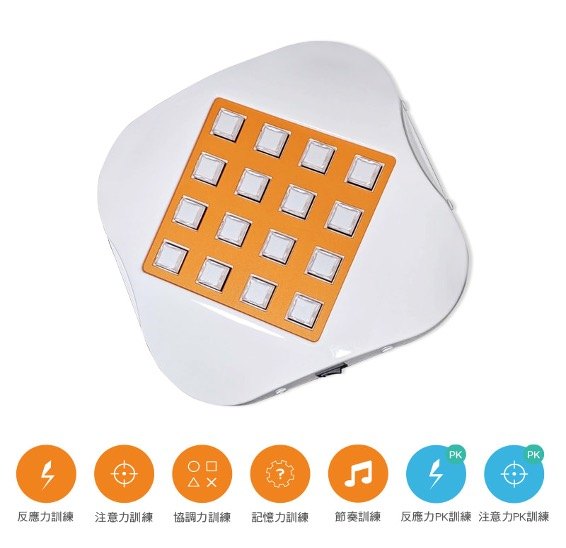
Interactive assessment records reaction time, accuracy, attention, memory and coordination, helping teams establish a clearer cognitive baseline and identify changes that deserve attention.
- Structured cognitive assessment
- Ability data stored over time
- Supports professional review and follow-up
FEATURE 02
Ability-Based Training: the right difficulty for each participant
Training content and difficulty can be matched to individual ability and performance. In small-group sessions, participants can train together while keeping their own data, level and progress.
- Assess first, then grade ability
- Different difficulty within the same service
- Professional quality without one-size-fits-all training
FEATURE 03
Professional Guidance: technology amplifies, not replaces, expertise
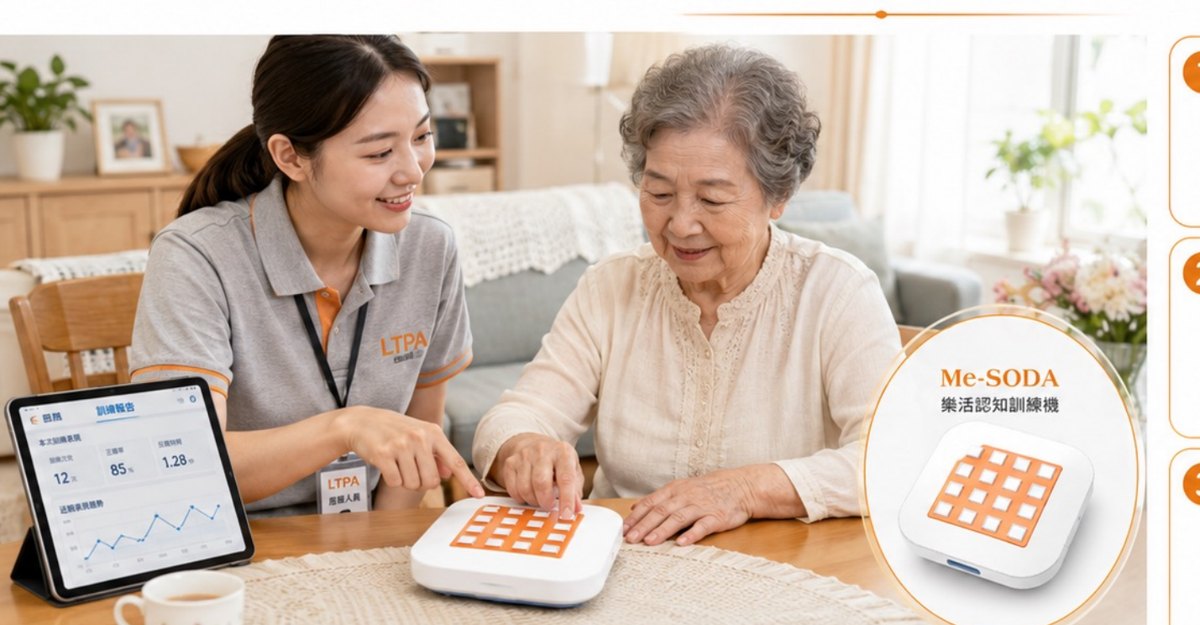
Therapists or trained professionals can use assessment results and training records to define goals, guide sessions and adjust the next stage of training.
- Individual goals and professional guidance
- Home one-to-one or community small-group delivery
- Training connects more naturally with everyday life
FEATURE 04
Continuous Tracking: make every session part of the health journey
Training records are accumulated over time so teams can compare performance, review progress and use data to guide the next action rather than relying only on one-time impressions.
- Individual performance records
- Progress and trend review
- Data supports continuous adjustment
Common Challenges
Detected Too Late
By the time cognitive changes are clearly noticed, the opportunity for earlier assessment, ability maintenance and proactive training may already have been missed.
THE CHALLENGE
Detected Too Late
Dementia care often begins only after changes become obvious. LTPA moves the starting point earlier by helping teams observe cognitive performance, establish a baseline and continuously track change over time.
Professional Service Process
A complete LTPA precision training workflow
From preparation and condition check to AI-supported training, data recording and feedback, every session follows a clear service process.
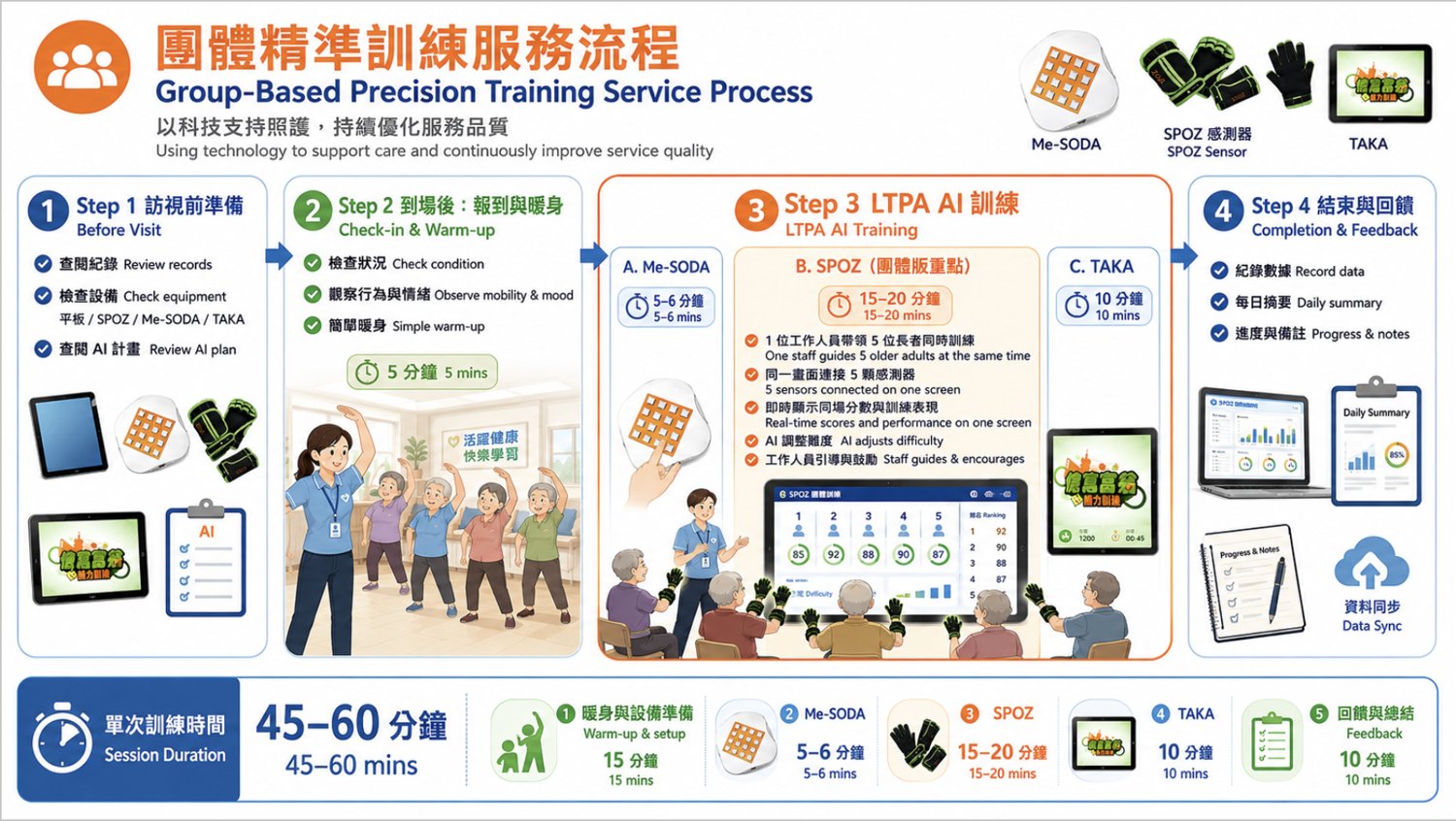
Home-Based Precision Training
Personalised dementia training, delivered at home
Designed for people who need more individual support, with training goals and difficulty matched to personal ability, daily-life needs and ongoing performance.
HOME 1-ON-1
Home-Based Precision Training
Professional training can be delivered in the participant’s own living environment. The service starts with assessment and individual goal setting, then continues through one-to-one training, progress recording and regular adjustment.
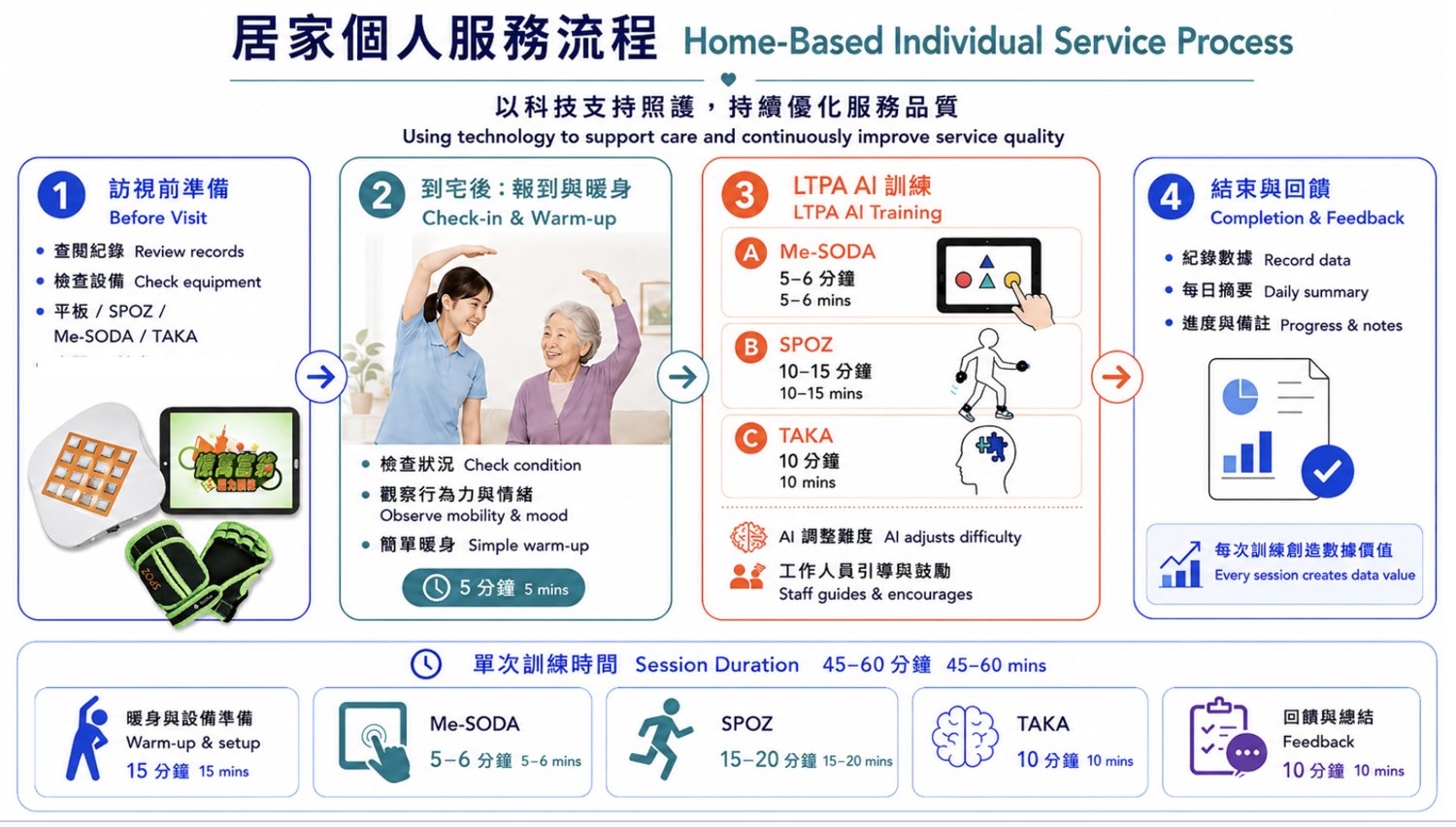
Group Precision Training
Train together, while keeping each participant individual
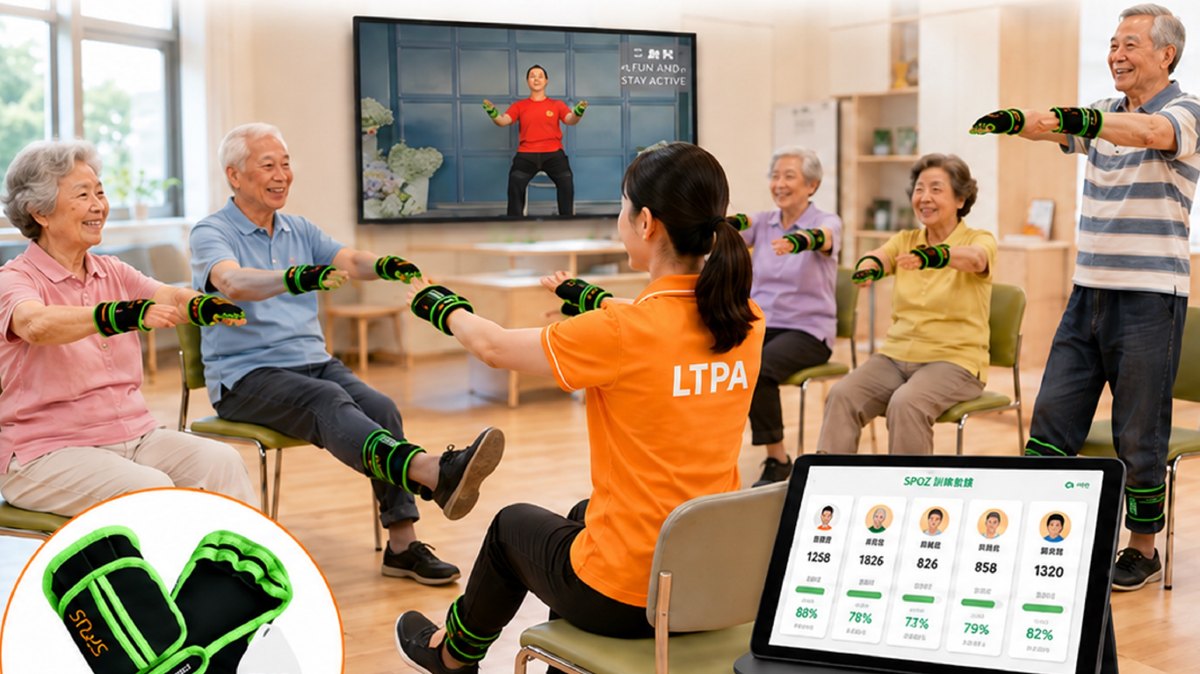
Participants with similar abilities can train in a small group while maintaining individual assessment, training level, performance data and progress records.
COMMUNITY SMALL-GROUP
Group Precision Training
Instead of having everyone follow the same activity, participants are assessed and grouped by ability. Technology helps professionals manage training content, difficulty and individual outcomes while expanding service capacity.
LTPA AI Devices
Technology that supports assessment, training and tracking
Me-SODA
Cognitive Assessment & Training
- Interactive cognitive assessment and training
- Focus on reaction, attention and memory
- Supports ability observation and longitudinal records
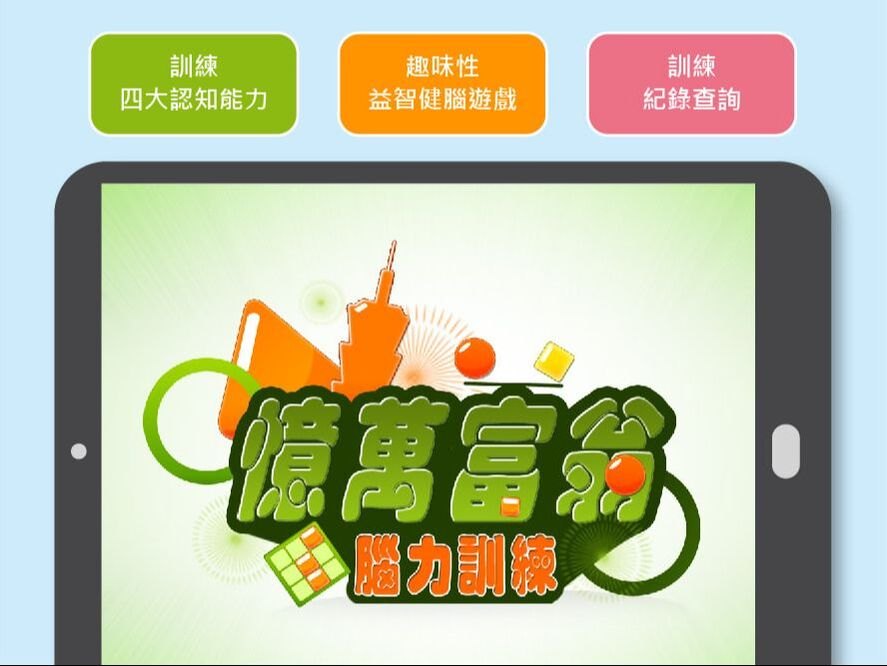
Me-TAKA
Interactive Cognitive Training
- Engaging cognitive training games
- Supports attention, memory and interaction
- Adjustable difficulty for different ability levels
SPOZ
Movement & Functional Training
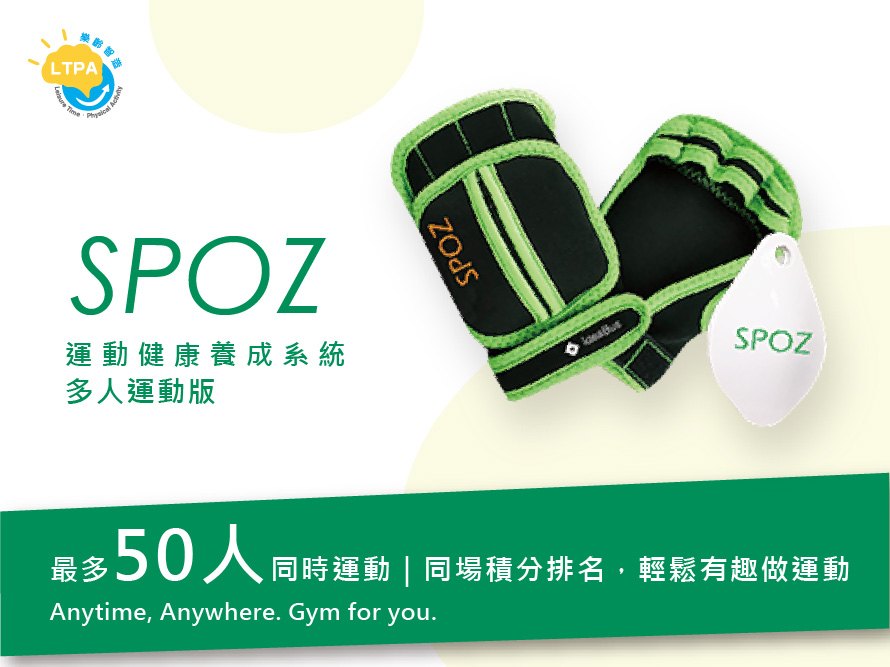
- Wearable movement sensing
- Supports functional exercise and group training
- Records movement performance for follow-up
FAQ
Frequently Asked Questions
Q1. Who is Dementia Precision Training designed for?
It can support people who need more structured cognitive and functional training, including those with cognitive decline, MCI or early-stage dementia, subject to professional assessment and service suitability.
Q2. Is every participant given the same training?
No. The core principle is assessment, ability grading and corresponding training. Content and difficulty are adjusted according to current ability and performance.
Q3. Can precision training be delivered in a group?
Yes. Community small-group precision training groups participants with similar abilities while preserving individual assessment, training records and progress data.
Q4. Does technology replace the therapist or professional?
No. LTPA uses technology to support assessment, data collection, training delivery and tracking so professionals can focus more on judgement, guidance and adjustment.
Q5. How is progress reviewed?
Each training session can contribute to a longer-term record. Teams can compare ability and performance over time and use the accumulated information to guide the next training decision.
Evidence & Application
Built on professional training, data and real-world deployment
LTPA continues to connect assessment, training and longitudinal data across medical, long-term care, community and home settings.
PRECISION TRAINING PRINCIPLE
Assess → Grade → Train → Track → Adjust
The service is designed around individual ability rather than having every participant perform the same training. Home one-to-one and community small-group models both retain individual assessment and progress records.
TECHNOLOGY + PROFESSIONAL SUPPORT
Technology expands professional capacity
Me-SODA, Me-TAKA, SPOZ and AI-Exercise support assessment, training and data tracking, while professional judgement remains central to goals, guidance and training adjustment.
This page presents a health-training service model and is not a substitute for medical diagnosis or treatment.