
M+BrainCare-Easy to Prevent Demendia
Utilizing a 40Hz light source to slow down brain degeneration and resist memory aging
Is your brain having a “SENIOR MOMENT“?
According to research, the activity of brain cells in humans may start to decline as early as 40 years old, and certainly between the ages of 45 and 60.

Experiencing memory decline
Occasionally forgetting recent events, sometimes struggling with familiar appliance operations, and feeling a decline in memory capacity.

Gradually losing interest in outdoor activities
Previously, I loved getting together with friends, but now I need to think twice before going out. My old hobbies have gradually lost their appeal.

Finding it challenging to do what used to be easy.
Tasks that used to be easy now take much longer to complete, and more complex tasks require even more time than before.
Utilizing M+ BrainCare Light to stimulate cognitive vitality
The three major benefits of M+ BrainCare Light are:
1. patented multi-frequency light technology: Ensuring the eyes are free from 40Hz flicker interference, while maintaining comfort and well-being
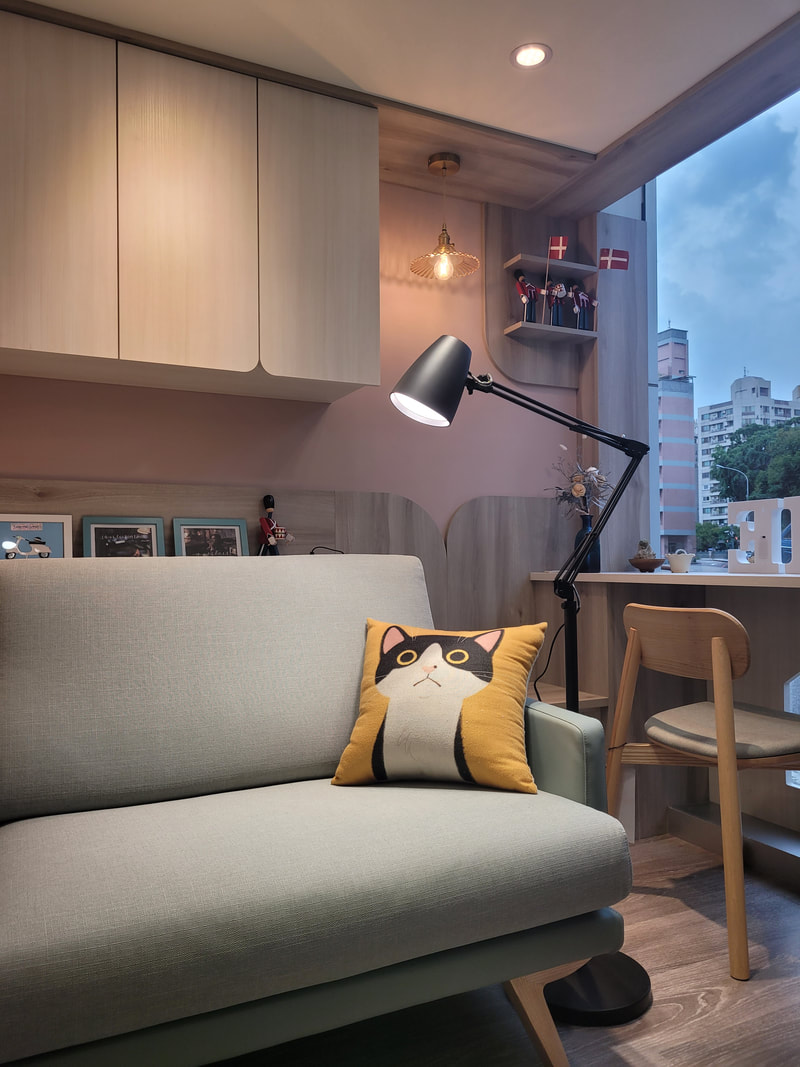
2. Easy to install and move: Offering both floor and desk lamp options for effortless installation and convenient mobility.
3. Clinical trial validated: The ‘M+ Multi-Frequency Lighting Fixture’ has been tested in cellular experiments and demonstrated its ability to reduce the secretion and aggregation of abnormal amyloid proteins.
High-color rendering LED, 40Hz light source, vibrant colors and cognitive protection.
The early onset of Alzheimer’s dementia is believed to be caused by the successive effects of abnormal beta-amyloid deposits in the brain, leading to neuronal apoptosis and subsequently affecting cognitive function.
The ‘M+ Multi-Frequency Lighting Fixture,’ validated through cellular experiments, has demonstrated its ability to reduce the secretion and aggregation of abnormal amyloid proteins.
M+ BrainCare Light Specifications
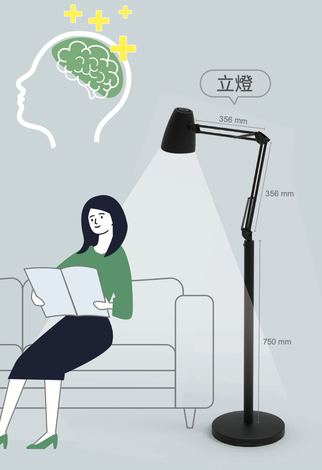
Option 1 – Mobile Floor Lamp
Featuring a freestanding design, it can be easily relocated to various spaces, with a three-stage adjustable angle, suitable for use in any space.
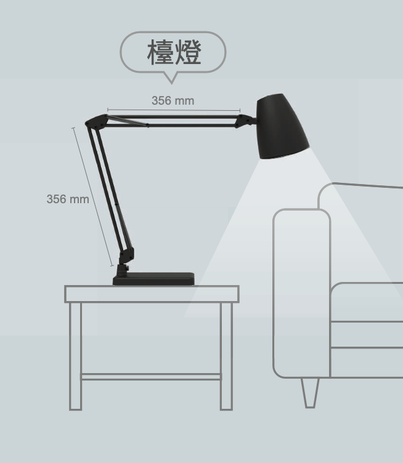
Option 2 – Desktop Desk Lamp
Designed as a tabletop model, it can be placed on a desk or flat surface, with a two-stage adjustable angle, suitable for use in corner spaces.
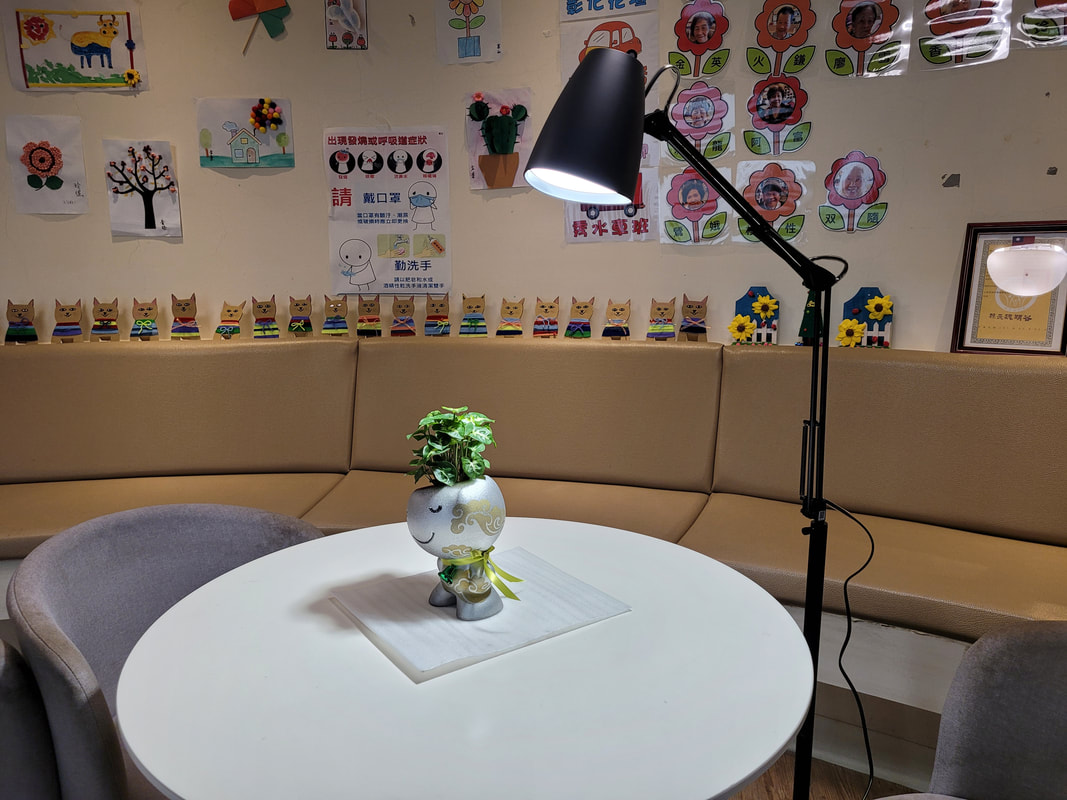
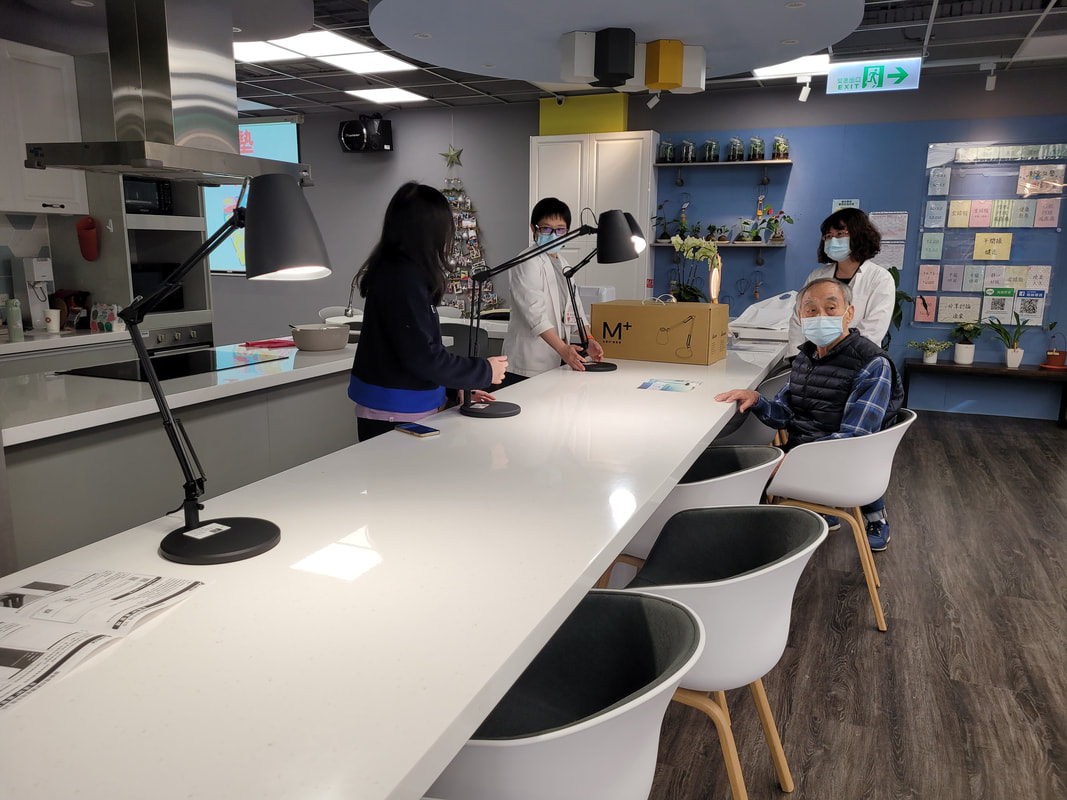
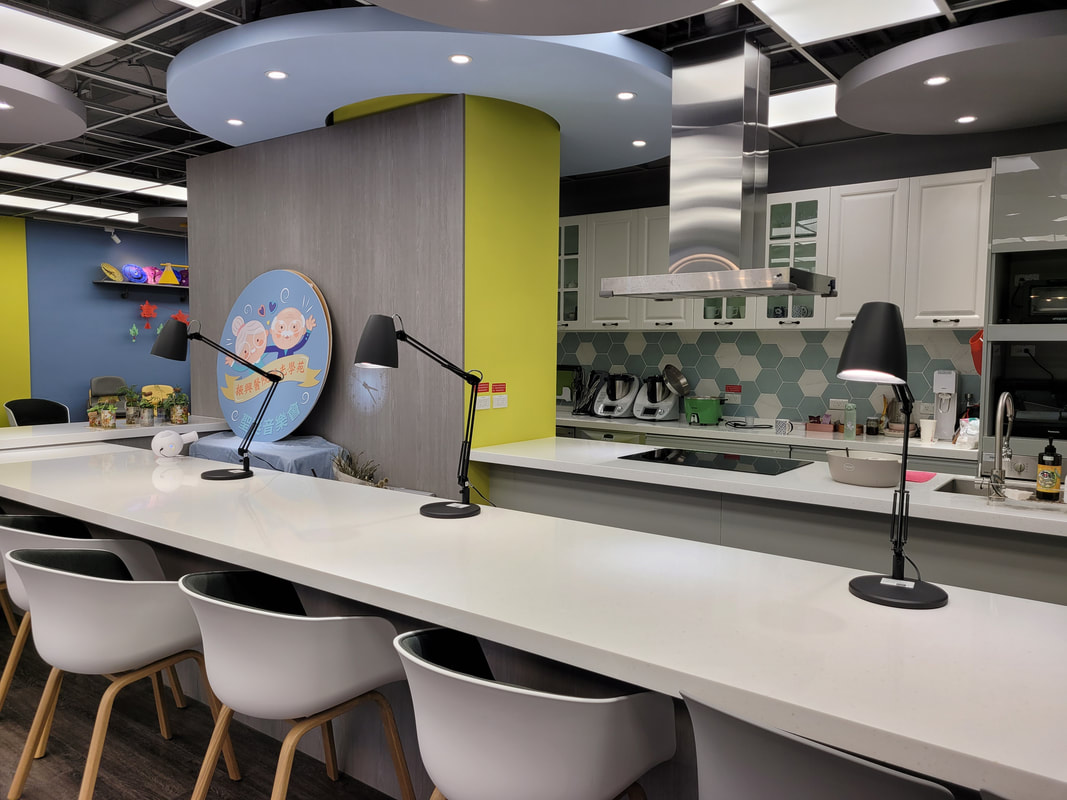
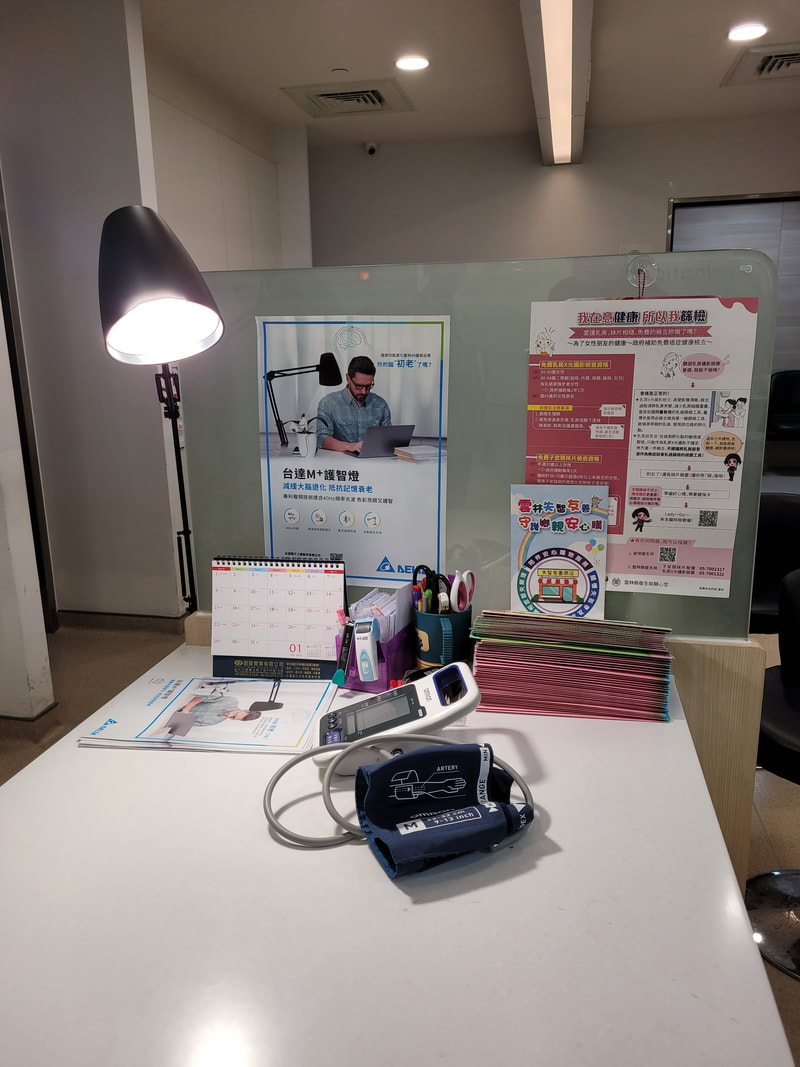
Adopted by over 20 hospitals and institutions, receiving rave reviews


Clinical Trial Data for M+ Brain Boosting Light
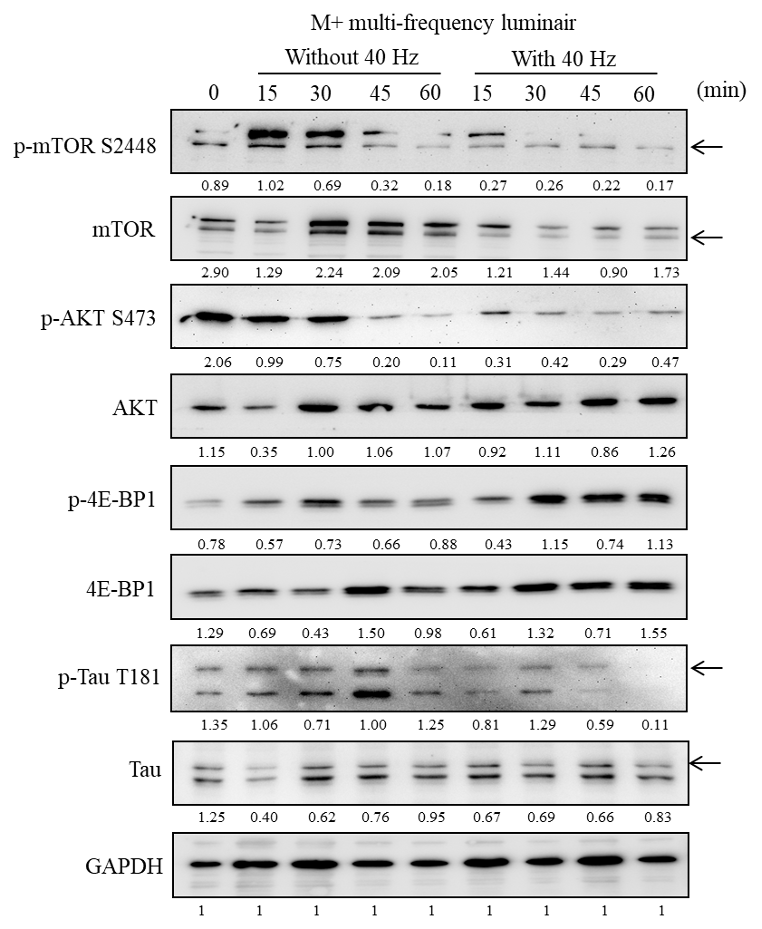
The experimental results show that cells exposed to the M+ Multi-Frequency Lighting Fixture exhibited a significant decrease in the expression levels of phosphorylated proteins, including Tau protein and mTOR protein, indicating that this light source can inhibit their phosphorylation.
- In this experiment, SH-SY5Y cells were exposed to the ‘M+ Multi-Frequency Lighting Fixture,’ and the changes in internal proteins were observed and compared with cells that were not exposed.
- The image on the right shows the results of the Western blot assay, which measures changes in protein quantity. Darker colors indicate higher protein quantities, while lighter colors indicate lower protein quantities.
- The experimental results indicate that cells exposed to the ‘M+ Multi-Frequency Lighting Fixture’ exhibited a significant decrease in the expression levels of phosphorylated proteins, including Tau protein and mTOR protein. This suggests that this light source can inhibit their phosphorylation.
- Tau protein and mTOR protein, both of which are considered detrimental proteins, can lead to dementia if they accumulate.
SH-SY5Y cells are commonly used as an in vitro model for studying neuronal function and cell differentiation. They have been extensively utilized in various areas of neuroscience research, including studies related to Parkinson’s disease, Alzheimer’s disease, neurotoxicity, focal ischemia, or amyotrophic lateral sclerosis (ALS). Furthermore, they can also be employed for investigating other characteristics of brain cells and neurogenesis.
Note: ① p-mTOR S2448 is a protein generated by cells during division. Experimental results indicate that its quantity decreases after exposure to M+ lighting, indicating that M+ lighting can stabilize it and prevent excessive cell division. Note: ② p-Tau T181 is a product of cell death. Experimental results show that exposure to M+ lighting can reduce the number of cell deaths.
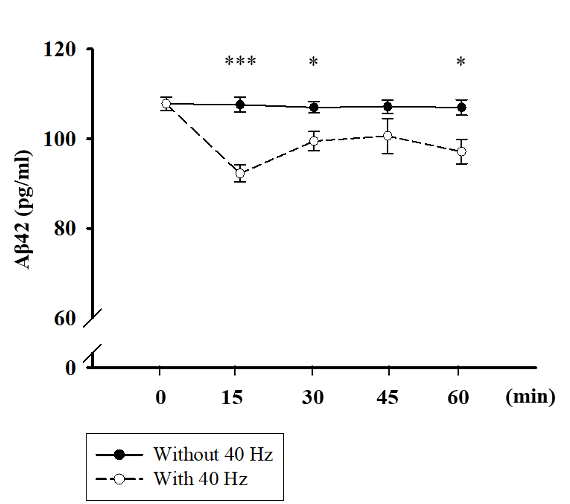
Aβ42 is a harmful amyloid protein, and it significantly decreases after exposure to “M+ complex frequency lighting.” The experimental results confirm that the M+ complex frequency light source can inhibit the aggregation of Aβ42 amyloid proteins.
Aβ40, Aβ42, and tau proteins in cerebrospinal fluid are considered potential pathological markers for the onset of dementia. Experimental results indicate that exposure to the “M+ complex frequency lighting” suppresses the secretion of Aβ42 in SH-SY5Y cells.
In the pathological mechanism of dementia, the secretion of amyloid protein Aβ42 increases, and once these proteins aggregate, they precipitate in the brain, leading to pathological changes. Reducing their production and aggregation is beneficial for patients.
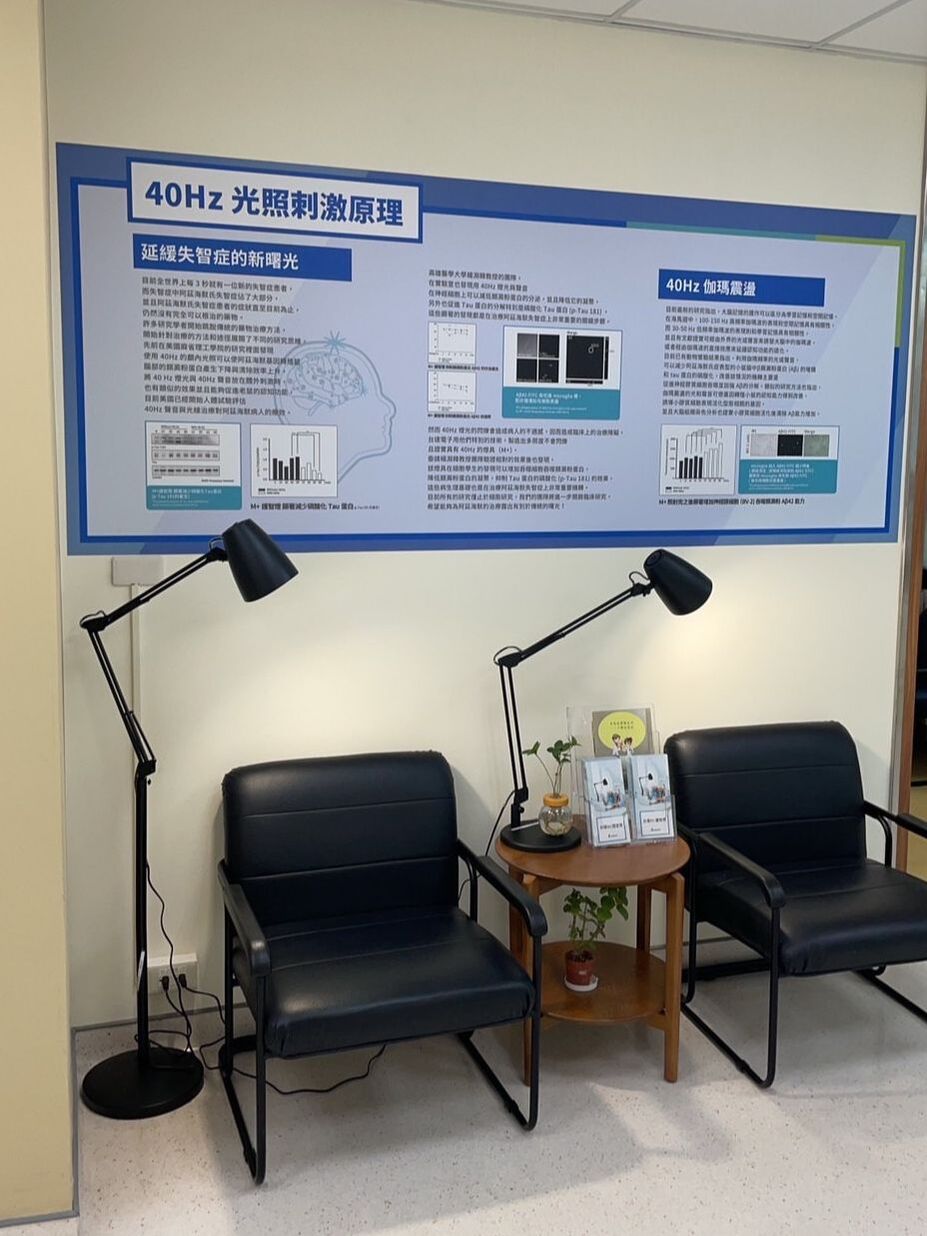
40Hz Light Stimulation Therapy
The 40Hz light stimulation therapy for Alzheimer’s disease was proposed by the research team led by Professor Li-Huei Tsai from the Department of Brain and Cognitive Sciences at the Massachusetts Institute of Technology (MIT). In December 2016, this research team published a study titled “Gamma frequency entrainment attenuates amyloid load and modifies microglia” in the journal “Nature.” This study revealed that “40Hz flickering light” can stimulate gamma brain waves in Alzheimer’s disease mice, reduce the accumulation of beta-amyloid-like proteins in the brain, and improve the function of microglial cells.
- At the 2021 Alzheimer’s and Parkinson’s Disease International Conference (2021 AD/PD), it was announced that the clinical phase 2 results of innovative audio-visual stimulation digital therapy for Alzheimer’s disease patients showed a reduction in the rate of decline in patients’ memory and cognitive ability scores by 83% and a 61% reduction in brain atrophy.
- The study included a total of 76 mild to moderate Alzheimer’s disease patients aged 50 and above. During the 6-month treatment period, patients received daily 1-hour sessions of 40Hz visual and auditory stimulation in their homes through randomization.